
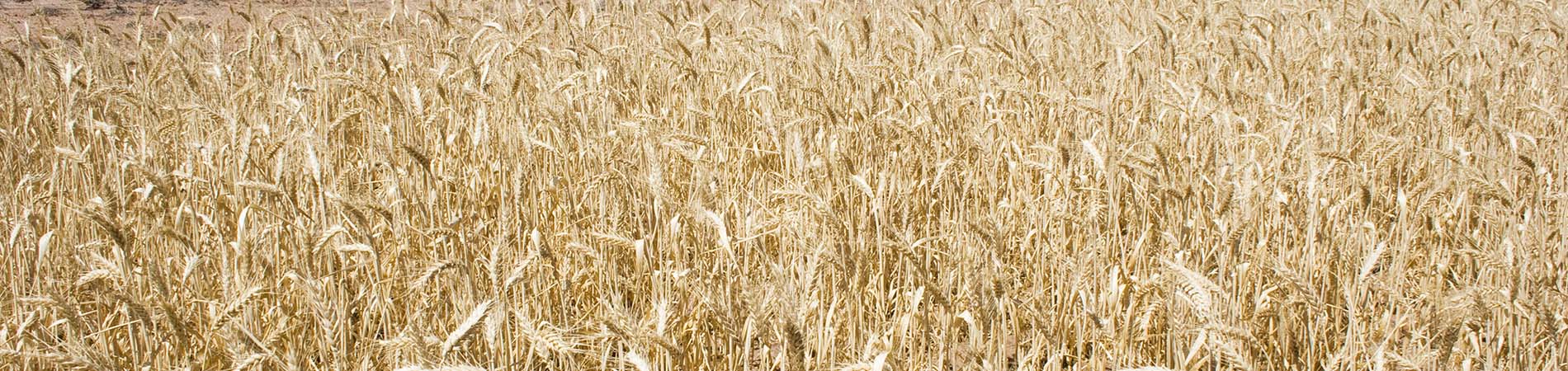
Sorghum bicolor seed
Country
Papua New Guinea (PG)
Group
Grains / Seeds
End use
Sowing
NPPO Details
PNG Biosecurity Authority
Relevant Web Addresses
| Criteria | Criteria Required? |
|---|---|
| Import Permit | Yes |
| Phytosanitary Certificate | Yes |
| Additional Declaration/Endorsement | Refer below |
| Protocol Market | No |
Permit may state that the product must be substantially free from arthropod pest including Redback spiders (Latrodectus hasselti) and Cattle tick (Rhipicephalus microplus).
If stated on the import permit, containers are to be cleaned or sanitised with an appropriate insecticide prior to loading. Exporter to provide evidence and to present to the Authorised Officer at time of inspection.
When an import permit is presented with no additional container requirements, standard container approval requirements of the Plant Export Operations Manual apply. If the import permit requests certification on the packaging/container/ship hold, the following certification must accompany the phytosanitary certificate:
- Ships Hold Certificate (EXDOC template GL12) - for bulk grain exports loaded into a ships hold;
OR
- Container Inspection Certificate (EXDOC template GL2) - for bulk containerised grain exports;
OR
- Sack and Container Inspection Certificate (EXDOC template GL3) - for bagged containerised grain exports
Endorsement 2178 or 998:
Only to be endorsed on phytosanitary certificates when the import permit specifically states this requirement. Import permits sighted in which there is no specific pest or diseases endorsement requirements are to be issued with nil additional declaration.
If stated on the import permit:
Treatmentis only to be endorsed on the phytosanitary certificate when the import permitspecifically states this requirement. When an import permit is presented withno treatment requirement, the consignment does not require treatment and aphytosanitary certificate will be issued without a treatment endorsement.
- Consignments are to be treated (dusted to excess) with an appropriate fungicide and insecticide at recommended manufacturers requirements;
- Fumigated with methyl bromide at 48grm/m3 for 3 hours at 21 degrees Celsius (or above);
- Fumigated with phosphine at 5grm/m3 for seven (7) days at temperatures above 25 degrees Celsius or ten (10) days at temperatures between 15 - 25 degrees Celsius.
Treatmentis only to be endorsed on the phytosanitary certificate when the import permitspecifically states this requirement. When an import permit is presented withno treatment requirement, the consignment does not require treatment and aphytosanitary certificate will be issued without a treatment endorsement.
Option 1 (EXDOC Endorsement 2178)
1) Khapra beetle (Trogoderma granarium) is known not to occur in Australia,
2) A representative sample was inspected and found free of Hide beetles (Trogoderma spp), Red imported fire ant (Solenopsis invicta), Cattle tick (Rhipicephalus microplus), Redback spider (Latrodectus hasselti), moulds, plant debris, weed seeds and contaminant seeds.
Option 2 (EXDOC Endorsement 998)
1) Khapra beetle (Trogoderma granarium) is known not to occur in Australia.
1) Khapra beetle (Trogoderma granarium) is known not to occur in Australia,
2) A representative sample was inspected and found free of Hide beetles (Trogoderma spp), Red imported fire ant (Solenopsis invicta), Cattle tick (Rhipicephalus microplus), Redback spider (Latrodectus hasselti), moulds, plant debris, weed seeds and contaminant seeds.
Option 2 (EXDOC Endorsement 998)
1) Khapra beetle (Trogoderma granarium) is known not to occur in Australia.
Import permits dated 28 November 2019, 02 August 2021, 09 June 2022 & 5 October 2023.
01/12/2023 - Updated general requirements to include options for GL2, GL12 & GL3
30/06/2022 - Amended text for endorsement 2178.
18/10/2021 - Updated treatment details based on NPPO requirements.
30/06/2022 - Amended text for endorsement 2178.
18/10/2021 - Updated treatment details based on NPPO requirements.
Initial Uploaded: 29/07/2014
Reviewed Uploaded: 18/07/2026