
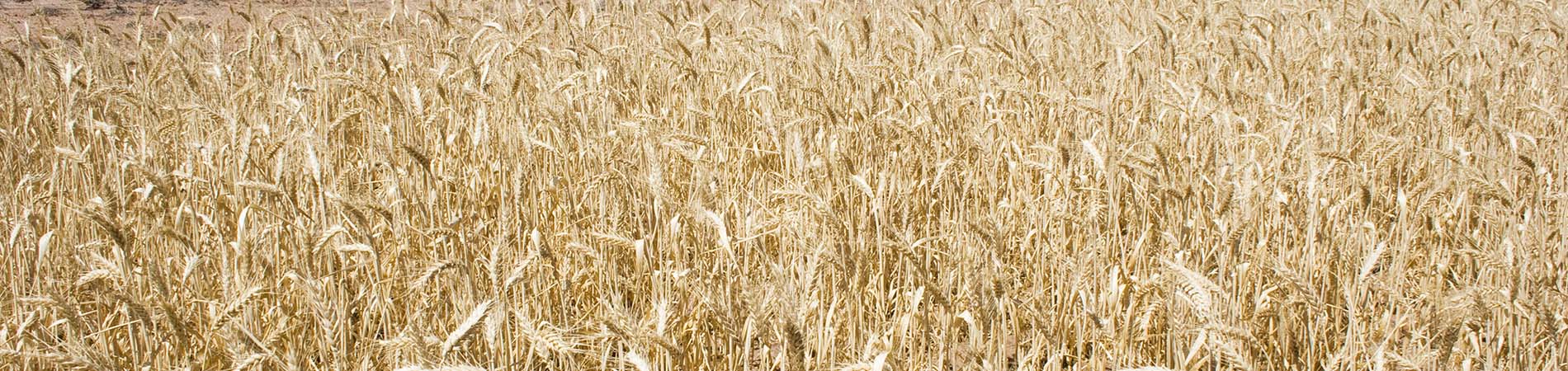
Canola
Country
New Zealand (NZ)
Scientific Name
Brassica napus
Group
Grains / Seeds
End use
Processing
NPPO Details
Ministry for Primary Industries (MPI)
Relevant Web Addresses
| Criteria | Criteria Required? |
|---|---|
| Import Permit | No |
| Phytosanitary Certificate | Yes |
| Additional Declaration/Endorsement | Refer below |
| Protocol Market | No |
The consignment must meet all requirements of IHS Part 1 and Part 2, including the requirement to be free of unidentified viable seeds which are:
- not listed in the PBI
- listed as "entry prohibited" in the PBI
- listed in the PBI and present in volumes greater than 0.1% in weight of the consignment
- listed in the Schedule of Regulated (Quarantine) Weed Seeds.
Explanation of endorsement 1304
- Applies to canola that has been treated to render them non-viable in Australia, using one of the treatment options listed in Appendix 2 of the IHS and detailed in the Treatment section of this Micor case.
Explanation of nil endorsement options:
Canola to be treated in New Zealand:
- Applies to viable grain / seed for treatment to render them non-viable at a transitional facility.
- It is the exporter's responsibility to ensure that the transitional facility receiving the products are approved for treating the consignment.
Canola for processing in New Zealand:
- Applies to viable grain / seed for processing to render them non-viable at a transitional facility.
- A Sampling Certificate (Additional Statement 8191) and Seed Analysis Certificate is required. Otherwise, the grain will be analysed upon arrival in New Zealand.
- The Seed Analysis Certificate must be issued by an Association of Official Seed Analysts (AOSA) or ISTA accredited seed testing station, or an Australian laboratory capable of undertaking the analysis.
Consignment must either be treated at a transitional facility after arrival in New Zealand or be treated in Australia at the following treatment schedule:
- Heat treatment: core temperature raised from 85 degrees Celsius at 40% minimum humidity for a minimum of 15 hours (continuous).
The exporter is to provide evidence attesting to the treatment and present it to the Authorised Officer at the time of inspection.
Details of treatment to be endorsed on the phytosanitary certificate in the treatment section.
If consignment is being treated at a transitional facility after arrival in New Zealand, a phytosanitary certificate with no treatment details is to be issued.
Option 1 (EXDOC Endorsement 1304)
1) The grain/seed in this consignment has been heat treated and the consignment contains no viable seeds.
Additional Statement:
Option 1 (Additional Statement 8191)
Declaration for seed sampling
1) A primary sample was officially drawn during the loading of the consignment, at a rate of at least one primary sample per 100 tonnes of grain.
2) All submitted samples were prepared and dispatched in accordance with ISTA rules.
Import Permits dated 15 August 2016, 19 December 2017, 23 May 2019 and 28 June 2022, CTO Direction 20180015 dated 9 October 2020, Grain and Seeds for Consumption, Feed or Processing GCFP.IHS sighted 22 December 2022 and Operational Standard PIT-GFP-ISR sighted 22 December 2022, NPPO notification dated 30 July 2025.
24/09/2025 - New additional statement 8191 created.
23/12/2022 - Update to general requirements to state thatphytosanitary certificate is required and treatment options based on NPPOupdate.
11/11/2022 - Updated general requirements to state when a phytosanitary certificate is required and removed additional declarations.
Initial Uploaded: 29/07/2014
Reviewed Uploaded: 16/09/2026