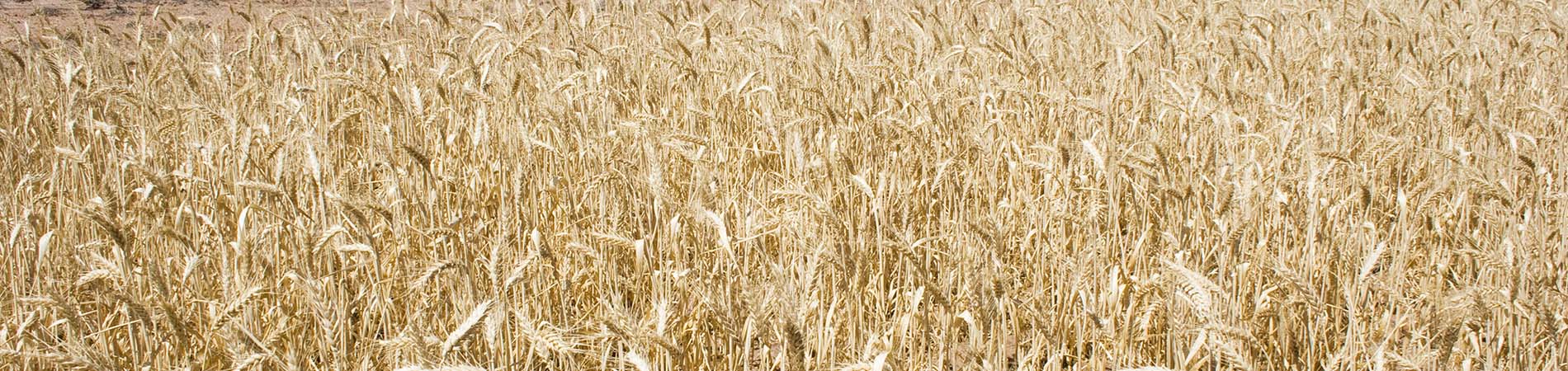
Wheat

Country
Malawi (MW)
Scientific Name
Triticum spp.
Group
Grains / Seeds
End use
Processing
NPPO Details
Department of Agricultural Research Services, Ministry of Agriculture, Irrigation & Water Development
Criteria Criteria Required?
Import Permit Yes
Phytosanitary Certificate Yes
Additional Declaration/Endorsement Yes
Protocol Market No
Consignments are to be free from pests, soil, weed seeds and extraneous material.


A copy of the import permit must be presented to an Authorised Officer at the time of inspection.


Non-GMO requirements:

If certification is required (refer to import permit/NPPO notification), the exporter is responsible for ensuring that the consignment is accompanied by a Certificate as to Condition attesting that the seed has not been genetically modified.

If requested, a Certificate as to Condition (Grain - GX46/Horticulture - HX46) can be issued for the consignment that is specifically supported from information supplied by the Office of the Gene Technology Regulator (OGTR) and where it is a government requirement of the importing country for non-GMO certification (refer to import permit/NPPO Notification).

The following text must be added to the additional declaration field when a GX46/HX46 template is added to the RFP:

The Office of the Gene Technology Regulator has advised the department that there has been no intentional release into the Australian environment of genetically modified product(s) listed on this certificate.


Explanation of endorsements

Endorsements 908 and 3527:

Are only to be endorsed on the Phytosanitary certificate where it is stated on the import permit.

Where it does not specify an Additional Declaration to be endorsed on the phytosanitary certificate, the certificate will be issued with No Additional Declaration.
Consignments are to be fumigated with an appropriate fumigant at recommended manufacturer's requirements.

If treatment is undertaken onshore exporter to provide evidence attesting to the treatment and to present to the Authorised Officer at time of inspection.

Details of treatment to be endorsed on the phytosanitary certificate in the treatment section.


In-transit fumigation:

In-transit phosphine fumigation details may be endorsed on the phytosanitary certificate in the treatment section as follows:

“THE ALUMINIUM PHOSPHIDE FUMIGATION OF [commodity] ONBOARD [enter vessel name] WAS CONDUCTED IN-TRANSIT BY A LICENSED FUMIGATOR AT [dosage] GRM/M3 FOR [number of days] DAYS [OR MORE] AT [temperature] DEGREES CELSIUS."

The date to be entered into the Start and End Date fields in the Treatment section of EXDOC (same date into both fields) is the date the tablets/pellets/sleeves are placed into the vessel holds.

The exporter is to provide evidence attesting to the treatment and present it to the department at time of authorisation.

Details of treatment to be endorsed on the phytosanitary certificate in the treatment section.

For treatment, which is not undertaken onshore, prior to departure, the licensed fumigator/exporter is to provide the Grain and Seed Export Program Grain.Export@aff.gov.au with:

  • permit issued by the APVMA allowing use of fumigant in-transit
  • fumigation plan including:
    • re-circulation method and monitoring lines and their locations
    • method of sealing holds during fumigation
    • method of clearing the fumigant from the consignment
    • method used to provide gas free certification
    • proposed dosage (grm/m3), temperature (degrees Celsius), and duration of treatment (days) in accordance with NPPO import conditions
    • vessel name, destination and holds loaded
    • commodity and quantity
    • signed and dated by the treatment provider or a management representative
A treatment certificate from the licensed fumigator containing the following information must be provided to the department at the time of requesting authorisation:
  • proposed dosage (grm/m3), temperature (degrees Celsius), and duration of treatment (days) in accordance with NPPO import conditions
  • vessel name, destination and holds loaded
  • commodity and quantity
  • signed by a licensed fumigator with contact details provided.
Note:
  • In-transit phosphine fumigation may only be undertaken when approved by the destination country.
  • If treatment is to be undertaken in-transit, consignment must be found free of live insects during phytosanitary inspection.
  • Fumigator must submit the Fumigation Plan to the Grain and Seed Export Program (Grain.Export@aff.gov.au) for approval before undertaking in-transit phosphine fumigation to meet importing country's quarantine requirement.

Option 1 (EXDOC Endorsement 908)
1) Khapra beetle (Trogoderma granarium) and Karnal bunt (Tilletia indica) are known not to occur in Australia.

Option 2 (EXDOC Endorsement 3527)
1) Karnal bunt (Tilletia indica) is not known to occur in Australia.  
Import permit dated 27 March 2017.
16/05/2025 - Updated treatment details.
23/04/2025 - Updated treatment details.
06/12/2022 - Update to non-GMO requirements
31/08/2021 - Added in-transit fumigation details.
Initial Uploaded: 29/07/2014
Reviewed Uploaded: 18/07/2026